Posts

Showing posts with the label eclipse

NASA PhotoNews: Ice Halos at Yellowknife

Image
NASA PhotoNews: Ice Halos at Yellowknife Image Credit & Copyright: Stephen Bedingfield Explanation: You've probably seen a circle around the Sun before. More common than rainbows, ice halos, like a 22 degree circular halo for example, can be easy to spot, especially if you can shade your eyes from direct sunlight. Still it's rare to see such a diverse range of ice halos, including sundogs, tangent, infralateral, and Parry arcs, all found in this snapshot from planet Earth. The picture was quickly taken in the late morning of September 4 from Yellowknife, Northwest Territories, Canada. The beautiful patterns are generated as sunlight (or moonlight) is reflected and refracted in six-sided water ice crystals in Earth's atmosphere. Of course, atmospheric ice halos in the skies of other worlds are likely to be different. Ice Halos at Yellowknife detailed.   === #NASA #space #photonews 18.09.14
Eclipsed Moon and Mars over Mountains

Image
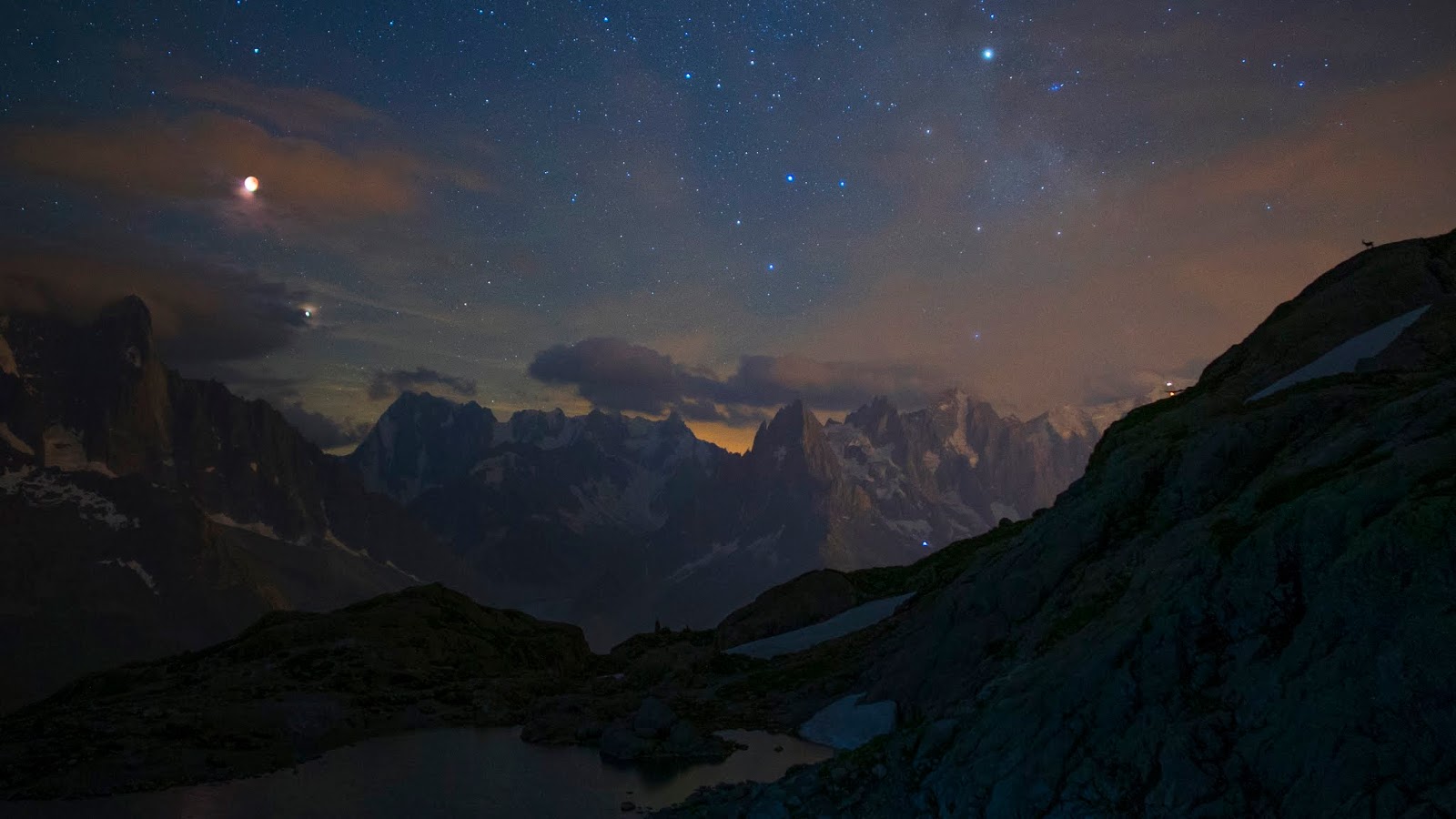
Eclipsed Moon and Mars over Mountains Image Credit & Copyright: Clément Brustel Explanation: There is something unusual about this astronomically-oriented photograph. It's not obvious -- it was discovered only during post-processing. It is not the Moon, although capturing the Moon rising during a total lunar eclipse is quite an unusually interesting sight. (Other interesting images also captured during last month's eclipse can be found here.) It is not Mars, found to the lower right of the Moon, although Mars being captured near its brightest also makes for an unusually interesting sight. (Mars is visible nearly the entire night this month; other interesting images of it can be found here.) It is not the foreground mountains, although the French Alps do provide unusually spectacular perspectives on planet Earth. (Other interesting mountainous starscapes can be found here.) It is the goat.   Original link: https://apod.nasa.gov/apod/ap180807.html

Central Lunar Eclipse

Image
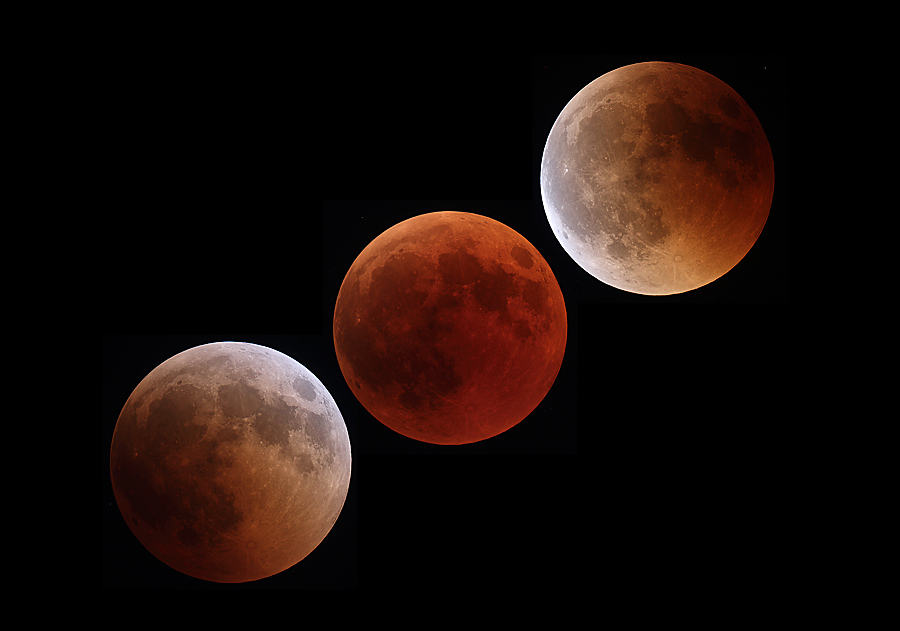
Central Lunar Eclipse Central Lunar Eclipse Image Credit & Copyright: Anthony Ayiomamitis (TWAN) Explanation: Reddened by scattered sunlight, the Moon in the center is passing through the center of Earth's dark umbral shadow in this July 27 lunar eclipse sequence. Left to right the three images are from the start, maximum, and end to 103 minutes of totality from the longest lunar eclipse of the 21st century. The longest path the Moon can follow through Earth's shadow does cross the shadow's center, that's what makes such central lunar eclipses long ones. But July 27 was also the date of lunar apogee, and at the most distant part of its elliptical orbit the Moon moves slowest. For the previous lunar eclipse, last January 31, the Moon was near its orbital perigee. Passing just south of the Earth shadow central axis, totality lasted only 76 minutes. Coming up on January 21, 2019, a third consecutive total lunar eclipse will also be off center and find the ...

Eclipse over the Gulf of Poets

Image
Eclipse over the Gulf of Poets Eclipse over the Gulf of Poets Image Credit & Copyright: Paolo Lazzarotti Explanation: The total phase of the July 27 lunar eclipse lasted for an impressive 103 minutes. That makes it the longest total lunar eclipse of the 21st century. The Moon passed through the center of Earth's shadow while the Moon was near apogee, the most distant point in its elliptical orbit. From start to finish, the entire duration of totality is covered in this composite view. A dreamlike scene, it includes a sequence of digital camera exposures made every three minutes. The exposures track the totally eclipsed lunar disk, accompanied on that night by bright planet Mars, as it climbs above the seaside village of Tellaro, Italy. In the foreground lies the calm mediteranean Gulf of La Spezia, known to some as the Gulf of Poets. In the 3rd century BCE, heliocentric astronomer Aristarchus also tracked the duration of lunar eclipses, though without the benefit of ...